


Choosing an AED?
Picture this, someone collapses, it’s from sudden cardiac arrest, the person reaching for the AED could be a colleague, a teacher or a security officer. They may never have faced an emergency like this before.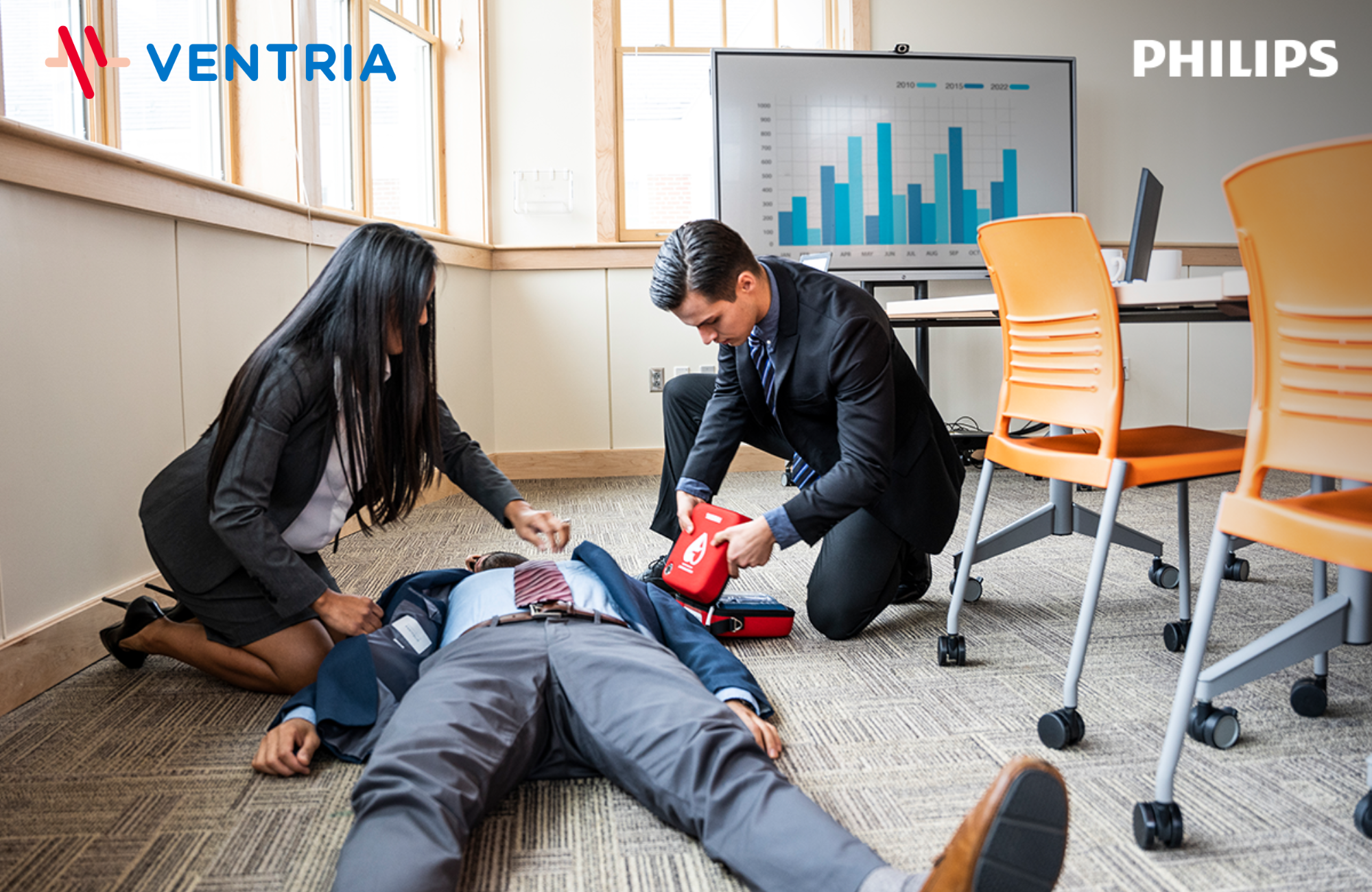
In that moment, they need clear instructions and equipment that is ready to use.
That is why choosing an automated external defibrillator deserves careful consideration. Alongside the purchase price, organisations should consider their regulatory approvals, ease of use, local track record and the availability of replacement consumables.
These are central reasons why Ventria supplies Philips HeartStart AEDs.
Philips AEDs: Confidence backed by FDA premarket approval
Medical equipment should come with evidence behind its claims. FDA premarket approval involves scientific and regulatory review of a device’s safety and effectiveness for its intended use. It is the FDA’s most stringent type of medical device marketing application. FDA premarket approval explained
The Philips HeartStart HS1 platform, listed in the United States as HeartStart OnSite and Home, and the HeartStart FRx have received FDA premarket approval. This provides an independently reviewed foundation for confidence when selecting these devices. FDA-approved AEDs
For an organisation investing in emergency preparedness, that evidence matters.
AED Life Guidance: support when it matters most
An AED needs to be understandable to the person using it under pressure.
Philips HeartStart AEDs feature Life Guidance, providing clear, step-by-step voice instructions to guide the responder through a cardiac emergency. The guidance helps users follow the rescue process, including placing the pads and performing CPR. Philips describes this approach as a personal coach supporting the responder through each stage. Philips Life Guidance
When comparing AEDs, ask to experience the instructions using a training device. Consider how easily your staff could follow them and whether the prompts would help them take action with confidence.
Training and regular familiarisation strengthen that confidence further.
A trusted presence in South Africa
Philips HeartStart AEDs have been trusted in South Africa for years. For customers, that established presence brings practical value: familiarity with the equipment, local support and access to the consumables needed to keep devices in service.
At Ventria, our work with Philips AEDs extends beyond supplying the equipment. We help organisations plan placement, prepare their staff and manage ongoing readiness.
The relationship with your AED supplier should continue throughout the life of the device.
Consumables availability is part of the purchasing decision
Before buying an AED, ask a simple question: How easily can we obtain replacement pads and batteries?
Pads have expiry dates and require replacement after use. Batteries also need replacement according to the manufacturer’s instructions and the device’s condition. Reliable access to these items is essential to keeping an AED ready.
Ventria supplies replacement Philips HeartStart pads and batteries locally, giving customers an established route for replenishment. Philips AEDs and consumables from Ventria
Ask about local stock, expected lead times, replacement costs and support after an emergency. These details help you assess the long-term value of the device and plan for its upkeep.
Choose the day it is needed.
The right AED combines credible approvals, clear guidance, suitability for your environment and dependable support. Its value also depends on keeping it accessible, maintaining it correctly and ensuring people know where to find it.
With Philips HeartStart AEDs and Ventria’s local support, organisations can build their preparedness around equipment that guides the responder and a partner that helps keep it ready.

Speak to Ventria about the right AED for your workplace, school or facility.

